Joshua Tree or Mojave Yucca? How to Tell the Difference
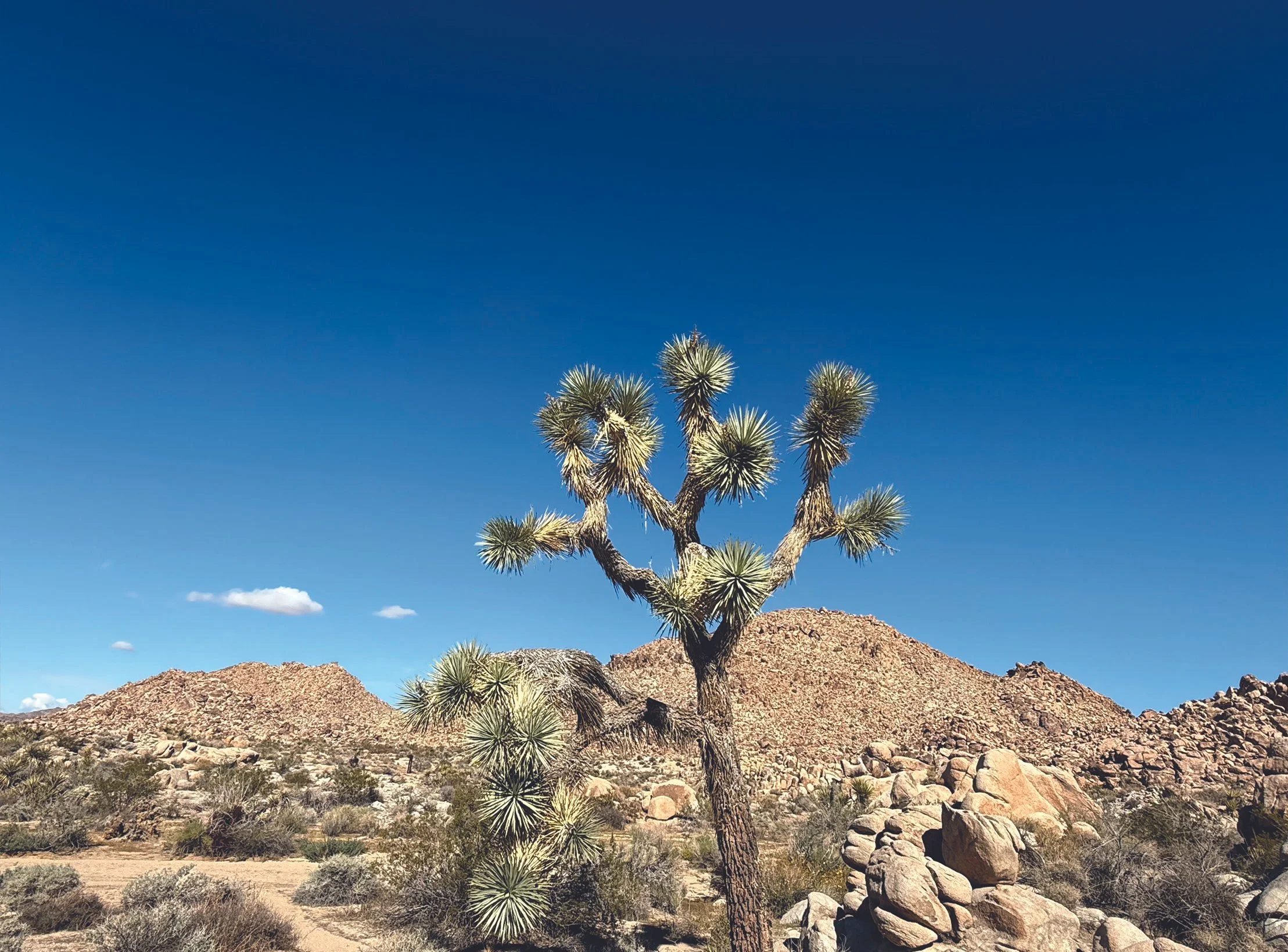
At first glance, it's easy to confuse Joshua trees with their close relative, the Mojave yucca. Both belong to the yucca genus and are closely related — in fact, a Joshua tree is technically just a tall, branching type of yucca, which is exactly why the two get mixed up so often. It can be especially tricky to distinguish them when Joshua trees are still small.
The good news: once you know what to look for, telling them apart gets a lot easier.
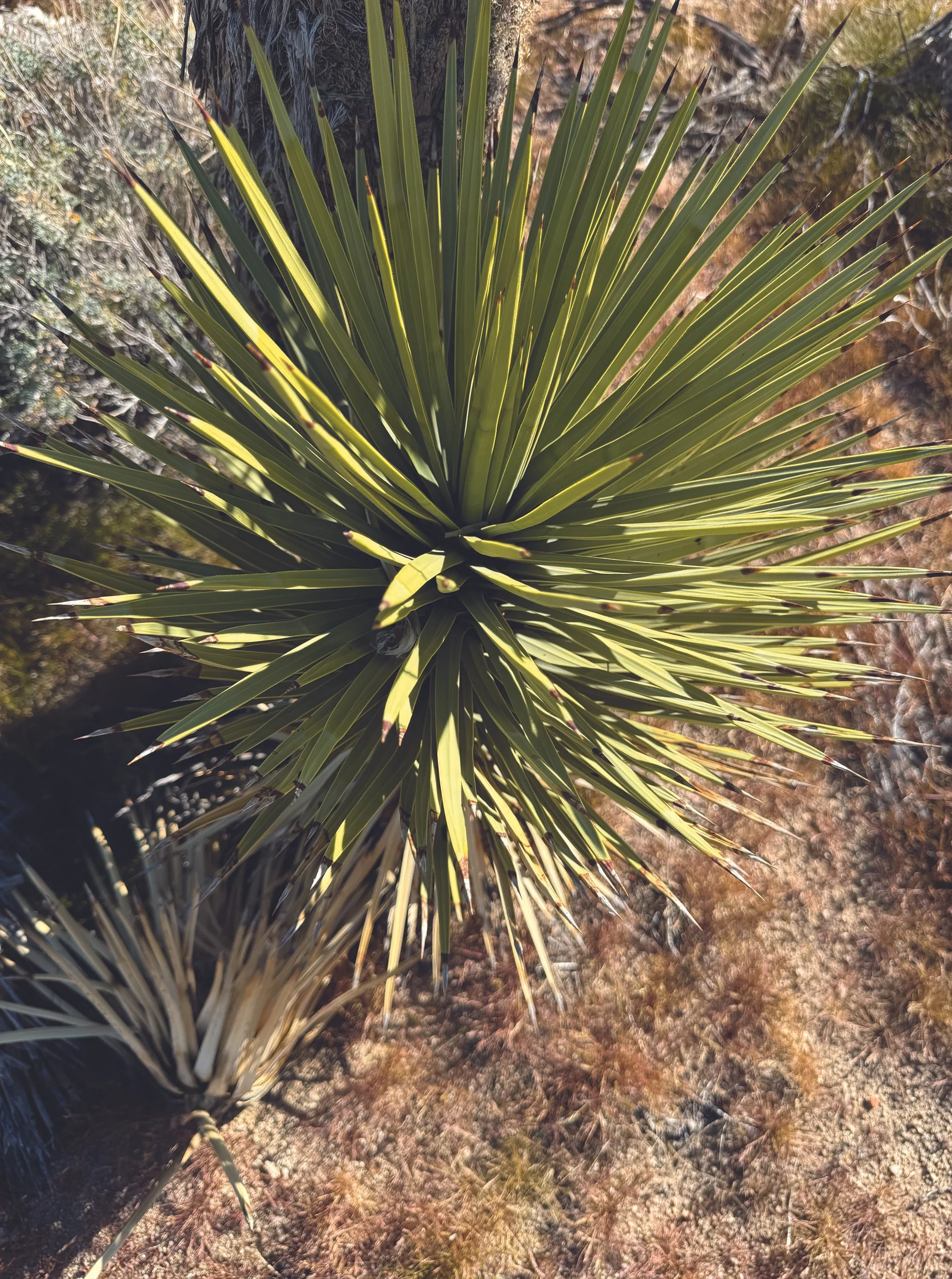
Leaves are the fastest clue. Joshua tree leaves are shorter, stiffer, and spike-like — generally under a foot long — with smooth edges and no fraying. Mojave yucca leaves are longer, broader, more fibrous, and edged with white, curly threads peeling off the sides. It's a fitting detail that the Joshua tree's scientific name, Yucca brevifolia, literally translates to "short leaves."
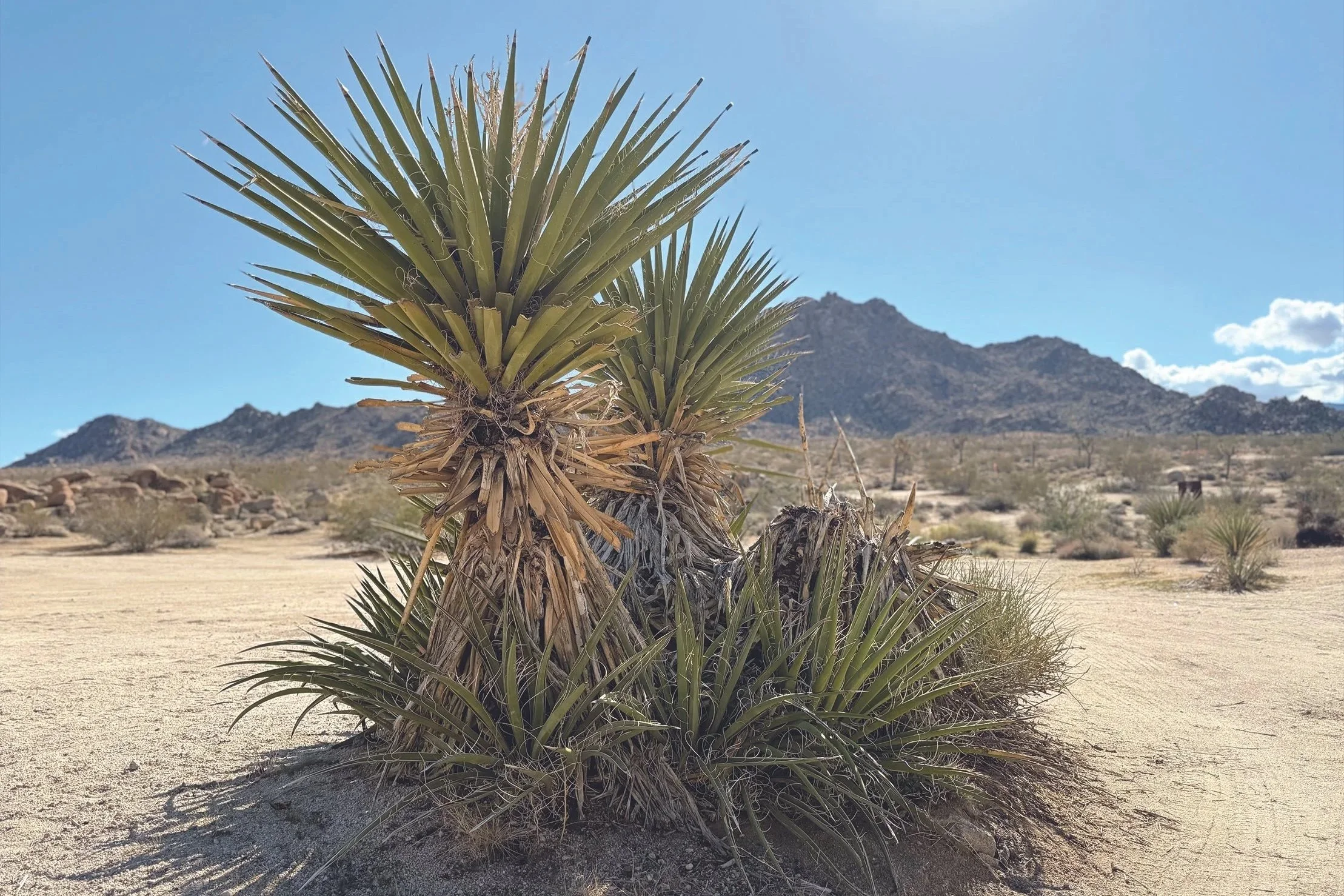
Yucca Trees
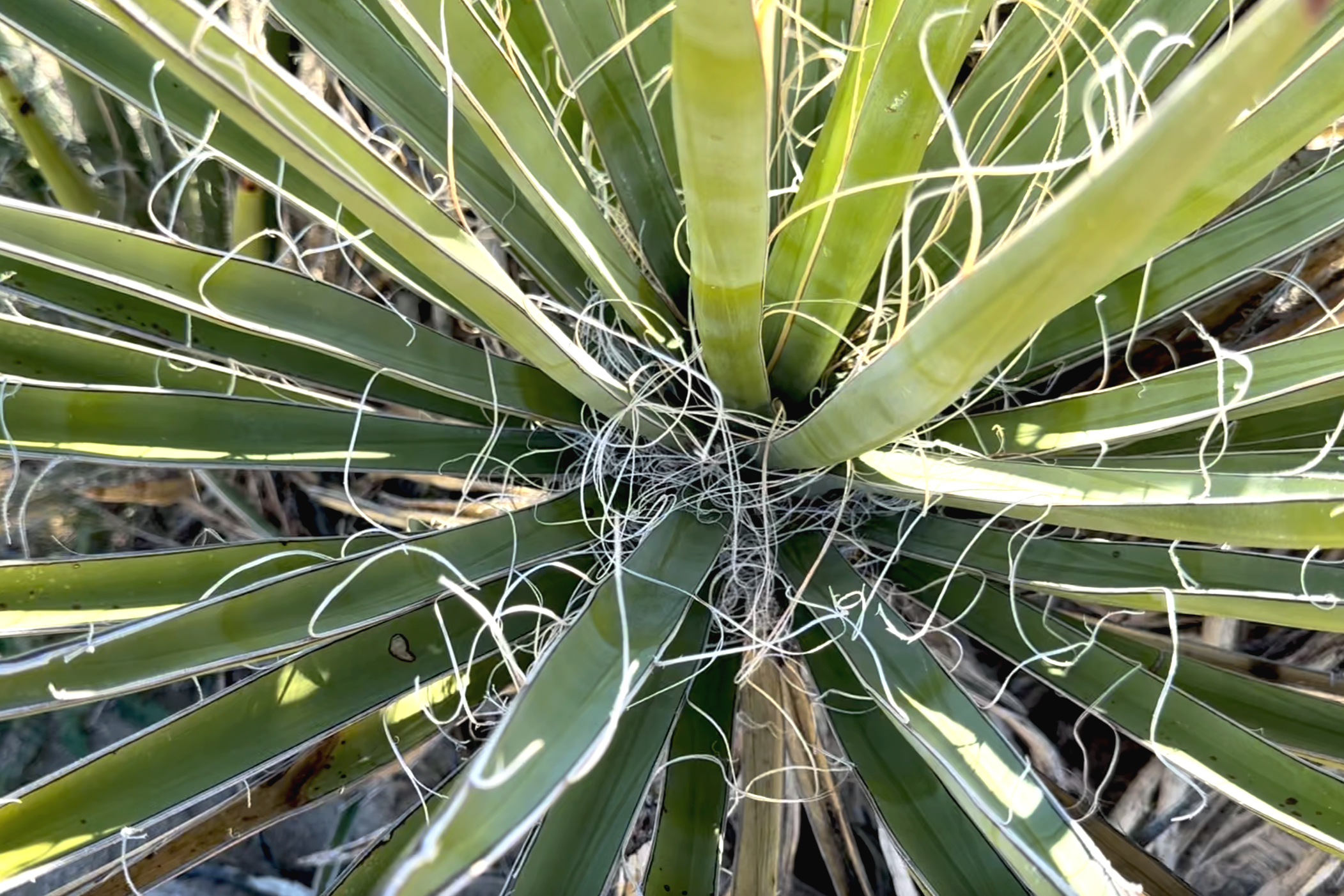
Yucca Tree Leaves with fibrous edges
Structure tells the rest of the story. A mature Joshua tree grows as a tall, branching, single-trunk tree — reaching 30 to 40 feet — often wrapped in a "petticoat" of dead, downward-pointing leaves along the trunk. Mojave yucca, on the other hand, stays shorter, grows in clumps, and sends its leaves out much closer to the ground.
Quick rule of thumb:
Threads on the leaf edges → Mojave yucca
Smooth, short leaves, no threads → Joshua tree
Fun fact: Joshua trees rely on a single, dedicated pollinator — the yucca moth — to reproduce. Without it, there'd be no new Joshua trees at all.
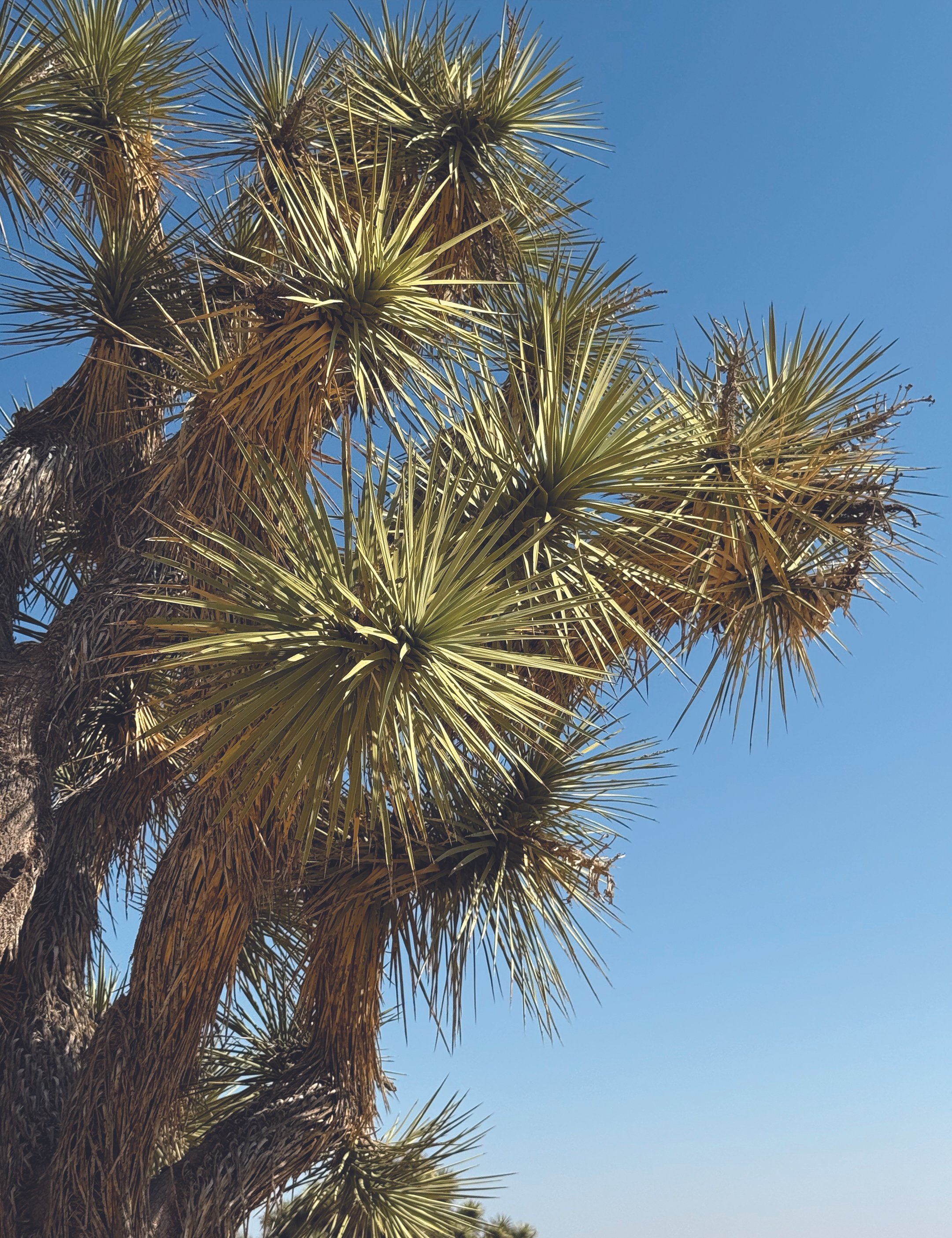
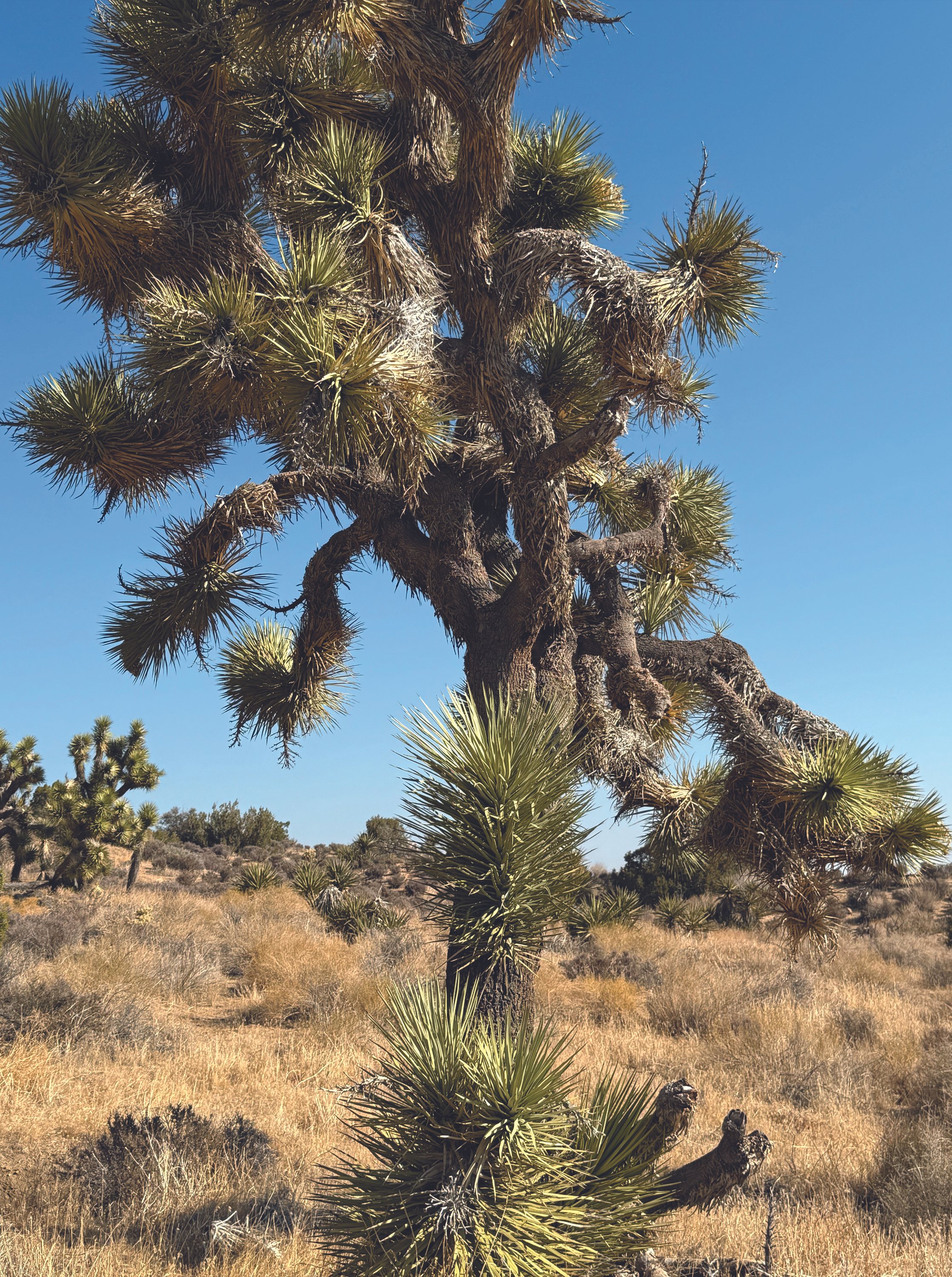
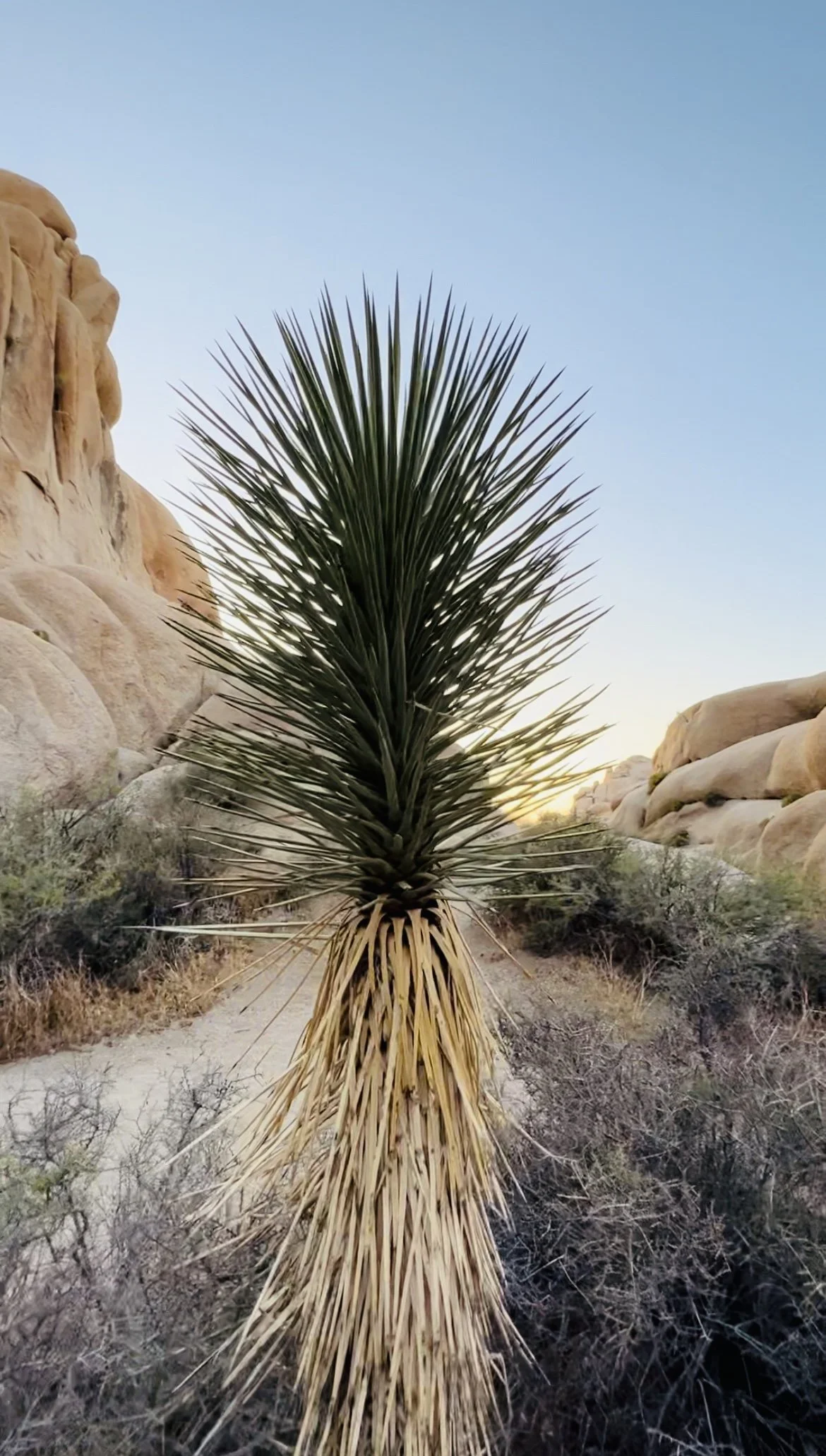
Joshua Trees in Joshua Tree National Park
Joshua trees favor higher, cooler ground. Within Joshua Tree National Park, they cluster on the northwestern, Mojave Desert side — around Joshua Tree, Hidden Valley, and Quail Springs — at elevations roughly between 3,700 and 6,000 feet. Head toward Twentynine Palms on the park's eastern side and you'll notice far fewer Joshua trees, since that area dips into the lower, hotter Colorado Desert — not prime Joshua tree habitat.
Mojave yucca thrives in some of these same areas but tolerates heat and low elevation much better, letting it range further and lower than the Joshua tree — south into the Colorado and Sonoran Deserts and down into Baja California. Yucca Valley is a great example: the town is actually named after the Mojave yucca, which grows there in abundance, even though it has plenty of striking Joshua trees too (some in town top 40 feet).
Check out our video below for more visual reference on how to tell the difference:
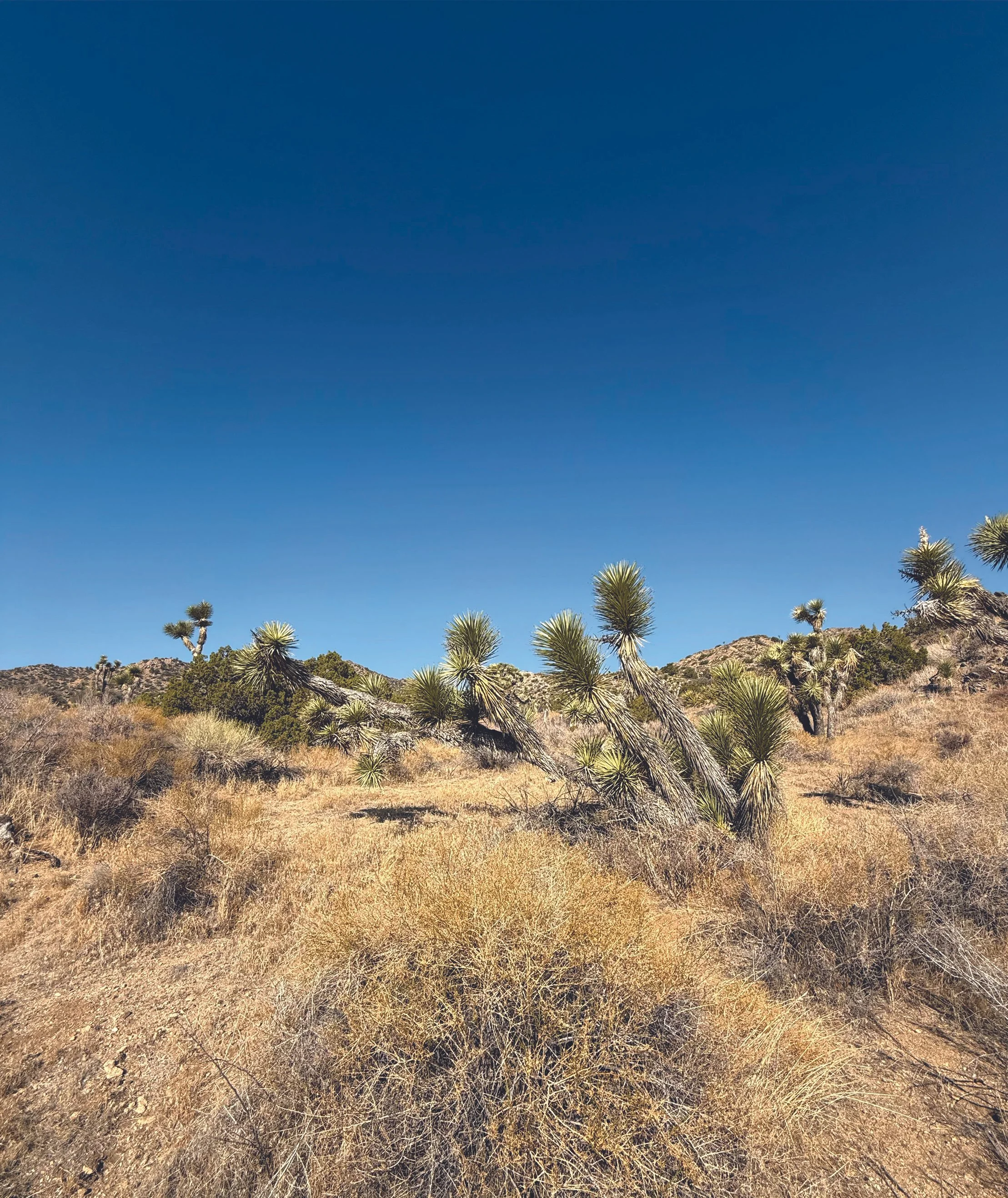
Joshua Trees in Black Rock Canyon in Joshua Tree National Park
FAQs
Where do Joshua Trees Grow Most? and Why It Matters if You're Buying Land in Joshua Tree, Yucca Valley, or Anywhere in the Mojave Desert
If you're looking at land in the Morongo Basin, how many Joshua trees you'll find varies quite a bit from area to area — echoing the same pattern within the park itself. Joshua Tree and Yucca Valley both sit at that higher, cooler sweet spot with dense, well-established Joshua tree populations, which is exactly why local building regulations around tree setbacks come up so often here. Head further east toward Twentynine Palms, and lots are less likely to carry the same tree-protection restrictions, since Joshua trees thin out noticeably in that lower, hotter desert.
Correctly telling the two apart matters for more than curiosity: Joshua trees are protected, and construction rules often require significant setbacks — sometimes at least 40 feet from a tree. The upshot: don't assume a lot is Joshua-tree-free just because it's outside the park boundary, and don't assume a Mojave yucca-covered lot is in the clear either. Walk the property and identify what's actually growing there before you plan your build site.
Can I Build Near a Joshua Tree in California?
Correctly telling the two apart matters for more than curiosity: Joshua trees are protected, and construction rules often require significant setbacks — sometimes at least 40 feet from a tree. The upshot: don't assume a lot is Joshua-tree-free just because it's outside the park boundary, and don't assume a Mojave yucca-covered lot is in the clear either. Walk the property and identify what's actually growing there before you plan your build site.
It's worth knowing this protection has teeth: in July 2023, California passed the Western Joshua Tree Conservation Act, which requires a permit from the CA Department of Fish and Wildlife for any "ground-disturbing work" near a western Joshua tree — fees can run $150 to $2,500 per tree. There's a widely-covered case of a Yucca Valley property owner with 250 Joshua trees on 1.2 acres who was quoted $32,000 in mitigation fees just to build a retirement home.